
That Smell When the Heat Kicks On? Let’s Talk About It
It’s the first cold night of the year. You flip the thermostat, the furnace rumbles to life, and that familiar dusty smell fills the house.
Normal, right? Usually. But if your furnace is 10, 15, or even 20 years old, a quiet question might be bugging you. Is this thing still safe?
You’re not being paranoid. Older furnaces can develop cracks in a part called the heat exchanger, and that’s how carbon monoxide can end up where it doesn’t belong. The good news? Regular furnace maintenance is how you catch those problems early, often years before they become dangerous.
In this guide, you’ll learn what really happens inside an aging furnace, which warning signs you can spot yourself, and what a trained technician checks that you can’t. You’ll also learn when it’s smarter to repair and when it’s time to move on.
What’s Really Going On Inside Your Old Furnace
Here’s the thing most people never hear. Your furnace doesn’t heat your home with fire directly. It burns gas inside a sealed metal chamber called the heat exchanger. The metal gets hot, and air blows across the outside of it to warm your house.
The fumes from burning gas stay inside that chamber. Then they go out the flue pipe. That separation is the whole safety system.
Why Metal Gets Tired
Every time your furnace runs, the heat exchanger heats up and expands. When it shuts off, the metal cools and shrinks. Over a single winter, that can happen thousands of times.
Think about bending a paper clip back and forth. It doesn’t break the first time. But eventually? Snap.
That’s metal fatigue. And after 10 or more years of Kansas winters, it adds up.
The Hidden Kansas Problem Nobody Mentions
Want to know something most furnace articles skip? In a lot of Wichita-area homes, the air conditioner’s indoor coil sits right on top of the furnace. During our hot, sticky summers, that coil makes a lot of water.
If the drain pan gets clogged or rusty, water can drip down onto the furnace. Season after season, that moisture can rust the heat exchanger from the outside. So your furnace can wear out faster in July than it does in January. Strange, but true.
Small Habits That Cause Big Cracks
A dirty air filter seems harmless. It isn’t. When air can’t flow well, the heat exchanger runs hotter than it was designed to. Extra heat means extra stress on the metal.
A furnace that’s too big for the house is another culprit. It blasts heat, shuts off fast, then starts again. Those short, choppy cycles put more strain on the metal than longer, steady runs.
Signs You Can Spot on Your Own
You don’t need tools or training to notice some red flags. You just need to pay attention.
Look at the burner flame through the little window on the front of your furnace. A healthy flame is mostly steady and blue. If it’s lazy, yellow, or dances around when the blower fan turns on, that’s worth a call.
Watch for black soot marks around the furnace door or vent pipe. Rust flakes inside the cabinet are another clue. So is a burner that keeps shutting off by itself.
Then there’s how you feel. Carbon monoxide can cause headaches, dizziness, nausea, and tiredness. It often feels like the flu. Sound familiar? Here’s a key detail. If everyone in the house feels sick at home, but better at work or school, take that seriously.
If Your CO Alarm Goes Off
Don’t troubleshoot. Don’t open windows and hope for the best. Get everyone out of the house, including pets. Then call 911 or your gas utility from outside.
Once everyone’s safe, you can deal with the furnace. Not before.
The Limits of a DIY Check
Look, here’s what matters. A crack can be smaller than a hair. It can hide behind other parts where you’d never see it. Some cracks only open up when the metal is hot and expanded.
So a “clean” look from the outside doesn’t mean your heat exchanger is fine. That’s where a pro comes in.
What a Pro Furnace Maintenance Visit Actually Covers
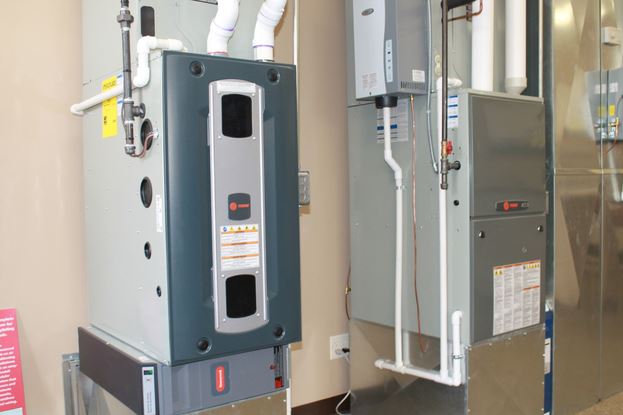
A good tune-up isn’t just a filter swap and a quick glance. For an older furnace, a technician should be looking for trouble on purpose.
Here’s how what you can check compares to what a trained tech can check.
| What Gets Checked | Can You Do It? | What a Technician Does |
|---|---|---|
| Air filter condition | Yes | Confirms the right size and airflow for your system |
| Burner flame color | Partly | Watches the flame closely as the blower starts, since a flame that jumps or wavers can point to a crack |
| Heat exchanger surface | No | Uses lights, mirrors, or a small camera to look inside the chamber |
| Carbon monoxide levels | Only with an alarm | Runs a combustion test in the flue and checks the air near vents |
| Rust and water damage | Partly | Inspects the AC drain pan and coil sitting above the furnace |
| Venting and flue pipe | Partly | Checks that fumes are leaving the home the way they should |
| Safety switches | No | Tests the switches that shut the furnace down when something goes wrong |
| Gas pressure | No | Measures it to make sure the burners aren’t running too hot |
That combustion test is a big one. It measures what’s actually coming out of your furnace. Small changes over the years can tell a tech that something is starting to go wrong.
Why Experience Matters on Older Units
Newer techs can learn a checklist. But spotting the early signs on a 15-year-old furnace? That takes years of seeing what failure looks like.
At Hanna Heating & Air, more than a dozen team members have 20 or more years working on Wichita-area heating systems. That kind of experience makes a real difference when the question is “Is this crack, or just a shadow?”
You Found a Problem. Now What?
Getting bad news about your furnace is frustrating. Nobody budgets for it. You might feel overwhelmed, especially if it’s 20 degrees outside.
Take a breath. You have options.
When a Repair Makes Sense
Plenty of problems on an older furnace are fixable. A bad igniter, a worn flame sensor, a clogged drain line, or a weak blower motor can often be repaired without breaking the bank.
A common rule of thumb helps here. Multiply your furnace’s age by the repair cost. If the number is under about $5,000, a repair usually makes sense. If it’s well over, it’s time to think about replacing.
When It’s Time to Replace
A cracked heat exchanger is a different story. Most technicians will recommend shutting the furnace down, and that’s for your family’s safety. Many furnace makers also call for replacing the heat exchanger or the whole unit once a crack is confirmed.
On a furnace that’s 15 or more years old, replacing the whole system is often the smarter money move. You’ll get better efficiency, quieter operation, and a fresh start on safety.
The Exception: Check Your Warranty First
Here’s something that surprises a lot of homeowners. Many furnace brands back their heat exchangers with a long warranty, sometimes 20 years or even a lifetime. That’s true even when the rest of the furnace is out of coverage.
The catch? It usually covers the part, not the labor. And it may only apply if the furnace was registered after install. Before you make a big decision, ask your technician to look up your model and serial number. It could save you real money.
A Calm, Honest Recommendation
The right contractor won’t scare you into a new system. They’ll show you what they found, explain your choices, and let you decide.
That’s how Hanna Heating & Air has worked with Wichita families since Pam and Carl Hanna started the company in 1983. With locations in West Wichita, Andover, and Newton, our team can look at your system, walk you through repair and replacement options, and help you find the right fit. That includes high-efficiency heat pumps and other newer systems if you’re ready for an upgrade.
How Often Should an Older Furnace Get a Checkup?
Once a year is the standard advice. For a furnace past the 10-year mark, think of that yearly visit as non-negotiable.
Fall is the best time. You want problems found in October, not during a January cold snap when every heating company in town is slammed.
Between visits, change your filter every one to three months. Keep the area around your furnace clear of boxes and cleaning supplies. And make sure you have working CO alarms on every level of your home, especially near bedrooms. Test them monthly.
Making Maintenance Easy to Remember
Let’s be real. Life gets busy, and “schedule the furnace guy” slides down the list fast.
That’s why Hanna Heating & Air offers a VIP maintenance program. Members get two seasonal tune-ups a year (one for heating, one for cooling), priority service, 10% off parts and labor, and 5% off replacements. It takes the remembering off your plate, so you’re covered before the weather turns.
Frequently Asked Questions
Can furnace maintenance prevent a cracked heat exchanger?
It can’t stop metal from aging forever. But it can slow the damage a lot. Clean filters, correct gas pressure, and a dry AC drain pan reduce heat and rust stress. Even more important, a yearly visit catches cracks early, before they turn into a safety issue.
How long do furnaces usually last?
Most gas furnaces last around 15 to 20 years with good care. Skipped maintenance can cut that short. Once your furnace hits 15, it’s smart to start planning for a replacement so you’re not forced into a rushed decision during a cold snap.
Will a CO detector warn me about a cracked heat exchanger?
A CO alarm is a must-have, but it’s a last line of defense. Many home alarms only sound once carbon monoxide reaches a certain level over time. A cracked heat exchanger can be getting worse well before that. A professional inspection finds the problem at the source.
Is it safe to run my furnace while I wait for a technician?
If your CO alarm has sounded, or anyone has CO symptoms, no. Leave the house and call 911 or your gas utility. If you just noticed a strange flame or soot and feel fine, turn the furnace off to be safe and call a technician to inspect it as soon as possible.
Peace of Mind Starts With One Visit
Here’s the bottom line. An older furnace isn’t automatically a dangerous one. But it does need more attention than it did when it was new.
Metal fatigue, summer moisture, and dirty filters all wear down your heat exchanger over time. You can watch for warning signs like a jumpy flame, soot, rust, or flu-like symptoms at home. But only a trained technician can really see inside and test what’s coming out of your furnace.
So don’t wait for the first freeze to find out where you stand. Schedule your fall furnace maintenance with Hanna Heating & Air today, and head into winter feeling relieved instead of worried.
Got a question about your own furnace? Drop it in the comments. We read every one.

Add Comment