
The Night Your Furnace Picks to Quit
It’s 2 a.m. in January. The wind is howling across the plains, and it’s 4 degrees outside. You wake up because something feels wrong. The house is quiet. Too quiet.
The furnace stopped.
If your furnace is 10 years old or older, that scene probably isn’t just a bad dream. It’s a real worry. And here’s the thing: it’s a fair one. Older furnaces don’t usually fail on a mild October afternoon. They fail when they’re working hardest, which is exactly when everyone else’s furnace is failing, too.
The good news? Most of those mid-winter breakdowns start as small problems you can catch early. In this guide, you’ll learn what furnace maintenance actually does for an older system, which parts tend to wear out first, what you can handle yourself, and how to tell when it’s time to stop repairing and start planning.
Why Older Furnaces Break on the Coldest Night
Ever notice how breakdowns seem to happen at the worst possible time? That’s not bad luck. It’s physics.
On a mild day, your furnace runs a few short cycles and rests. During a Kansas cold snap, it may run for hours with barely a break. Every worn part gets pushed to its limit at the same time. A weak motor that limped through November finally gives out in January.
The Summer Sleep Problem
Your furnace sits still for five or six months every year. Dust settles on the burners. Spiders build nests in the vents. Rubber parts dry out. Then one chilly morning, you flip the thermostat, and that sleepy system is asked to go full speed.
That first startup is when a lot of hidden problems show up. A quick burning smell for a few minutes is normal, since it’s just dust burning off. A furnace that clicks, tries to light, and shuts off again is a different story.
When Your Whole Town Calls at Once
Here’s what matters most. When a hard freeze rolls into Wichita, Andover, and Newton, thousands of older furnaces get stressed on the same night. Phones at heating companies light up. Small shops with two or three trucks can get swamped fast.
That’s why the smartest time to deal with a weak furnace part is before the weather turns, not during the rush.
What Furnace Maintenance Actually Checks
You might picture a tune-up as someone swapping your filter and leaving. A real furnace maintenance visit goes much deeper, especially on a system that’s been running for a decade or more.
A trained technician tests how your furnace starts, burns, moves air, and vents. They’re looking for parts that still work today but are close to the end of their life. Think of it like a doctor’s checkup for something that runs your whole house.
The Parts That Wear Out First on 10+ Year Furnaces
Some furnace parts fail far more often than others as a system ages. Here’s what our technicians see most often on older units, and the warning signs you might notice at home.
| Part | What Goes Wrong With Age | Warning Sign You Might Notice | Caught During a Tune-Up? |
|---|---|---|---|
| Flame sensor | Gets coated with buildup and can’t “see” the flame | Furnace lights, then shuts off after a few seconds | Yes, cleaned and tested |
| Hot surface igniter | Gets brittle and cracks over time | Clicking with no flame, or no heat at all | Yes, checked for cracks and weak readings |
| Blower motor and capacitor | Capacitor weakens, motor bearings wear | Humming, slow start, weak airflow | Yes, measured against the rated values |
| Inducer motor | Bearings wear and get noisy | Rattling or whining when the furnace starts | Yes, listened to and tested |
| Heat exchanger | Metal can crack after years of heating and cooling | Often no sign at all, which is the danger | Yes, visually inspected plus a carbon monoxide test |
| Filter and blower wheel | Dust builds up and chokes airflow | Rooms heat unevenly, higher energy bills | Yes, cleaned or replaced |
| Venting and flue | Rust, loose joints, or blockages | Water stains near the flue, odd smells | Yes, checked for safe draft |
Look closely at that heat exchanger row. A cracked heat exchanger may give you no warning at all, but it can let carbon monoxide into your home. That one alone is a good reason older furnaces need a professional set of eyes every year. Make sure you also have working carbon monoxide alarms on every level of your home.

The Small Fixes That Prevent Big Calls
Want to know the secret? Many “no heat” calls in the middle of winter come down to a $20 to $50 part. A dirty flame sensor. A weak capacitor. A cracked igniter.
Those parts are cheap and fast to fix in October. In January, the part costs the same, but you’re waiting in line with your family wrapped in blankets. Catching them early is the whole point of fall furnace maintenance.
What You Can Do Yourself (and What You Shouldn’t)
Look, you don’t need to be an expert to help your furnace last. A few simple habits make a real difference between visits.
Change your filter every one to three months during heating season. Kansas wind and dust clog filters faster than you’d think, and homes with pets or allergies should lean toward the shorter end. Keep the area around your furnace clear of boxes, paint cans, and laundry. Walk outside and make sure your vent pipes aren’t blocked by snow, leaves, or a bird’s nest.
It also helps to test your heat early. Turn your thermostat up on a cool fall day, well before you need it. If something sounds or smells off, you’ve found the problem while you still have time.
Where DIY Stops
This doesn’t work if you start opening up gas parts. Anything involving the gas valve, burners, heat exchanger, or wiring belongs to a licensed technician. It’s not about skill. It’s about safety, since a mistake with gas or carbon monoxide isn’t something you get to try twice.
The exception is a simple filter swap and visual checks. Beyond that, call in a pro.
Repair or Replace? A Straight Answer for Older Furnaces
It’s frustrating when you keep paying to fix the same old furnace. You might feel stuck, not sure if one more repair is smart or just throwing good money after bad.
Most furnaces last about 15 to 20 years with good care. Once yours passes 10, every repair decision deserves a second thought.
The $5,000 Rule
Here’s a simple rule of thumb many HVAC pros use. Multiply your furnace’s age by the cost of the repair. If the number is over $5,000, it’s usually time to look at replacement.
Say your furnace is 16 years old and needs a $400 repair. That’s $6,400. Replacement starts to make more sense. A 10-year-old furnace with a $200 fix comes out to $2,000, so repair is usually the better call.
It’s not a perfect formula. A cracked heat exchanger on an older unit almost always points toward replacement, no matter the math. And a well-kept 18-year-old furnace might still have a few good winters left.
Signs It’s Time to Plan Ahead
Rising gas bills, rooms that never feel warm, frequent repairs, and a furnace that runs almost nonstop are all signs your system is slowing down. None of them mean you need a new furnace tomorrow.
But they do mean you can plan the switch on your schedule instead of in an emergency. That gives you time to compare options, including high-efficiency furnaces, heat pumps, and ductless mini-split systems. If cost is a concern, financing options can make a planned replacement a lot less stressful than a surprise one. You can explore new systems on our heating installation page.
How Hanna Keeps Older Furnaces Ready for Kansas Winters
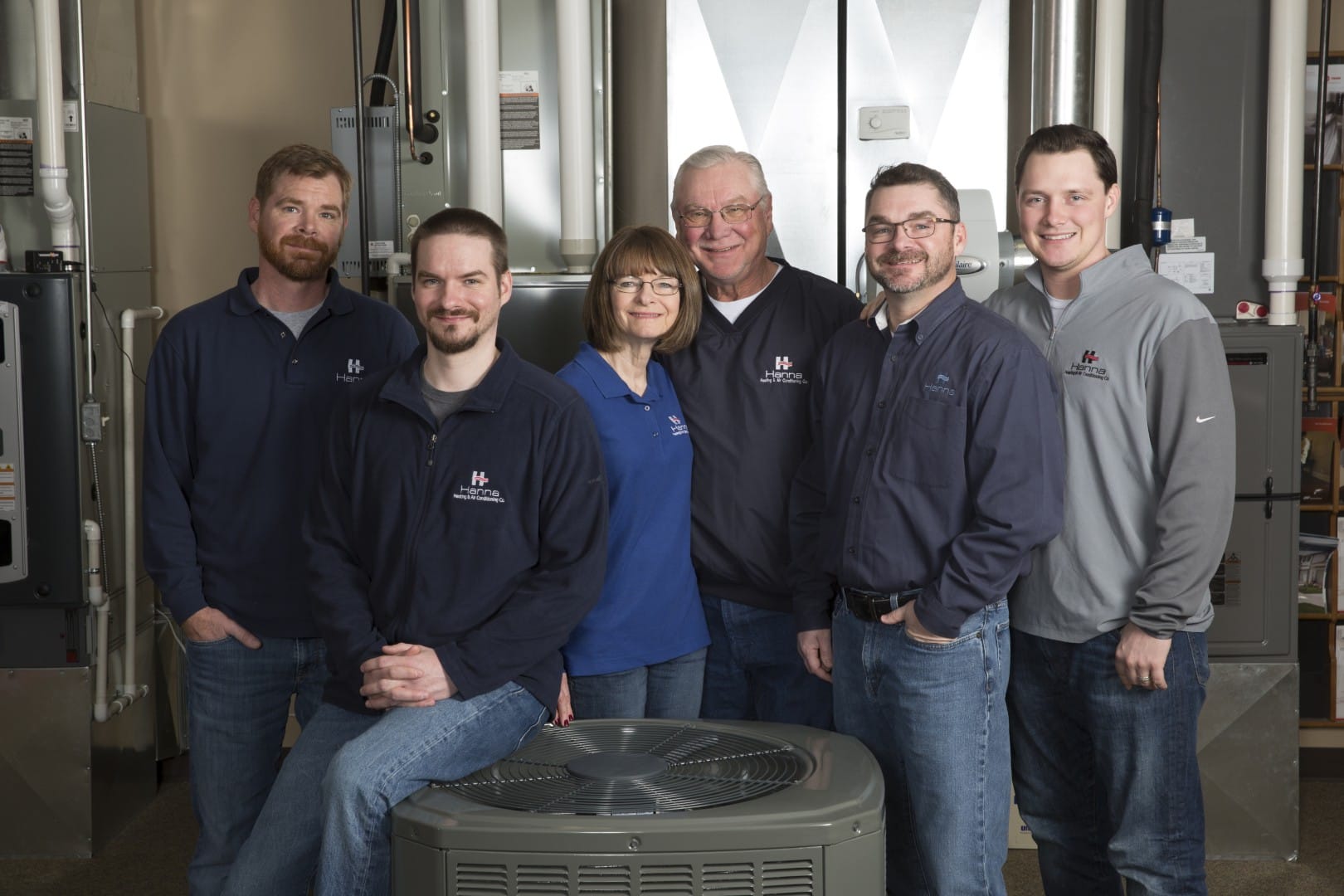
Hanna Heating & Air has been keeping Kansas homes warm since 1983. Over the decades, our team has seen just about every way an older furnace can fail. Several of our technicians have more than 20 years of hands-on experience in Wichita-area homes, so they know what a tired furnace sounds like before it quits. You can meet the team and see for yourself.
We also built our company to handle the busy nights. With more than 70 trucks on the road and locations in West Wichita, Andover, and Newton, Hanna is set up to reach more homes when a cold snap hits and calls pile up all at once.
Get to the Front of the Line Before Winter
Our VIP Home Maintenance Program is made for homeowners with older systems. Members get two seasonal tune-ups each year, one for heating and one for cooling. You also get priority service when you call, plus 10% off parts and labor on repairs and 5% off a replacement system.
Think about what that means for an aging furnace. Your system gets checked every fall. Worn parts get flagged early. And if something does go wrong on a frigid night, you’re not starting at the back of the line.
If Your Heat Is Already Out
If you’re reading this with a cold house, don’t panic. Check that your thermostat is set to “heat,” look at your breaker, and make sure your filter isn’t packed with dust. If that doesn’t fix it, our emergency repair service and furnace repair team can help. If you smell gas, leave the house first and call your gas utility from outside.
Frequently Asked Questions
How often does an older furnace need maintenance?
A furnace that’s 10 years or older should get professional furnace maintenance once a year, ideally in early fall. Older parts wear faster, so a yearly check catches problems like a weak igniter or a cracked heat exchanger before winter stress makes them fail.
What’s the best month to schedule furnace maintenance in Kansas?
September through early November is the sweet spot. The weather is still mild, schedules are more open, and any parts that need replacing can be handled before the first hard freeze. Waiting until December means competing with every other homeowner whose furnace just quit.
Is furnace maintenance worth it on a 15-year-old furnace?
Yes, and arguably more than on a newer one. At 15 years, your furnace is in the stretch where parts commonly fail and heat exchangers can crack. A tune-up keeps it running safely and gives you an honest read on how much life is left, so you can plan a replacement instead of being forced into one.
Can furnace maintenance prevent every breakdown?
No, and anyone who promises that isn’t being straight with you. Maintenance can’t stop every surprise, especially on very old systems. What it does is catch the most common failure points early, lower your odds of a no-heat call, and keep your furnace running safely.
Stay Warm, Stay Ready
An older furnace doesn’t have to be a ticking clock. Change your filter often. Test your heat before you need it. Get a professional tune-up every fall so worn parts get fixed on a calm October day, not a frozen January night. And when repairs start adding up, use the $5,000 rule to plan your next step calmly.
You don’t have to figure this out alone. Hanna Heating & Air is ready for Kansas winters, so you don’t have to be. Schedule your furnace tune-up today or call (316) 945-3481, and head into winter knowing your heat will be there when you need it.
Add Comment